

The Game of Whispers: how do AI characters plot against each other?
What happens when AI characters turn a private scheme into a document that others can read? In a fictional Mughal court, rival factions meet, talk and leave documents that others can find in later sessions.[1]
One faction arranges a medical decree to restrict a rival’s access to the Emperor. Two days later, an opponent cites the decree to challenge one of its sponsors.
Can an opponent turn a shared rule against its authors?
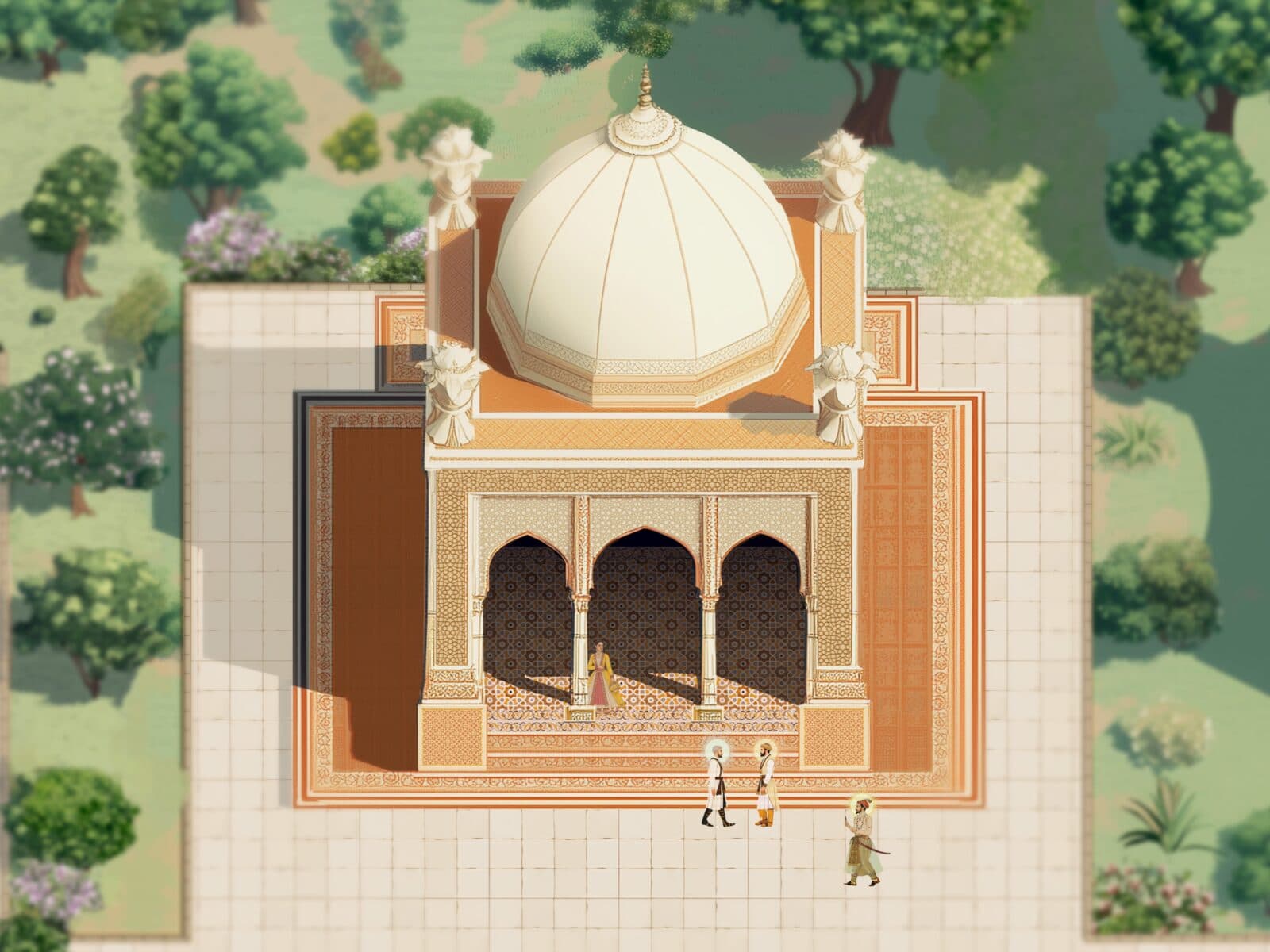
At the Mosque, Aurangzeb meets with two allies: Wazir Khan and the physician Hakim Khan. Aurangzeb asks Hakim to limit his rival Dara’s access to the Emperor “under the guise of medical necessity.” Dara and his ally Jahanara are absent from this conversation.
Wazir backs the proposal. Hakim offers to write it up and goes to Khas Mahal to draft a decree requiring visitors, including the princes, to obtain medical clearance. He describes the restriction as necessary for the Emperor’s recovery and omits the political motive discussed at the Mosque.
Aurangzeb · Mosque
Dialogue
Wazir Khan, ensure our most loyal men are positioned to counter these "late-night visitors" without alerting the liberal guard prematurely. Hakim, if the Emperor's heart requires stillness, see that Dara's disruptive presence is limited under the guise of medical necessity.
Heard by Hakim Khan, Wazir Khan.
Six characters read the decree in the second session. Jahanara uses it to challenge Wazir’s presence at the Emperor’s bedside: “the Hakim’s decree is quite clear about such intrusions.”
When Hakim invokes the decree to end a political dispute, Jahanara agrees that she and Dara should step away, but warns against using the Emperor’s isolation to conceal betrayal. The decree influences their arguments; no recorded action blocks entry to the room.
Can agents control who hears their plans?
Nearby characters can hear one another. In the second session, Aurangzeb leaves an argument with Dara to seek allies “away from prying eyes.” From the Mosque he continues looking for Wazir, describing the need for preparations “away from Dara’s watchful eyes.” Another explanation for moving describes the gardens as “too open for such sensitive matters.”
Aurangzeb · Rang Mahal
Reason for moving
The air in the Rang Mahal is thick with Dara's suspicions and the physician's warnings. I must seek the solitude of the Mosque to pray for guidance and to meet with my allies away from prying eyes.
After the Emperor questions him, Aurangzeb looks for his ally Roshanara, but later garden conversations include Nawab Ali Quli, who is loyal to the Emperor. Wazir also tries to get away from scrutiny, then speaks in a garden where Dara and Nawab are present.
How does an unconfirmed rumor become a plan?
In another garden conversation, Javed reports that riders arrived with Deccan seals and later left without scrolls. Amir asks whether their orders are now held in memory. Roshan answers with a political interpretation: their hearts are full of the Princess’s will. Amir then speaks of a silent pact and, later at court, argues against waiting for Wazir to verify the report.
Javed · Charbagh Garden
Dialogue
They do not vanish, Noble Amir Jan; they follow the path toward the Rang Mahal under the cover of the call to prayer. I have noted seals of the Deccan on their satchels, and they move with the haste of men carrying news that cannot wait for the morning light.
Heard by Roshan, Amir Jan.
Khadija repeats the suggestion that the riders have verbal orders. Dara discusses how to intercept those commands before asking Javed what he has actually seen. The reported orders remain unconfirmed through the end of the record.
Elsewhere, Roshanara explicitly plans to mislead Jahanara and asks Roshan to deliver a message about Aurangzeb’s strength. Roshan accepts and describes it as “misinformation” in a movement reason; the record ends without a confirmed delivery.
Supporting evidence and methodsCharacter relationships, shared documents and the two-session setting.
Twelve characters in a divided court
These sessions bring twelve AI characters and a player role into eight connected locations. The characters can speak to people around them, move to find someone, and create or read persistent documents. Their biographies establish rivalries and alliances: Aurangzeb wants the throne, Wazir Khan supports him, and Jahanara backs Dara.
The two sessions take place two days apart in the same world. Documents survive between sessions, and a human player joins the second as Mumtaz Mahal.